
Pistol 201
From the holster, one step at a time.
The bridge between your first pistol class and defensive training. Pistol 201 opens with a full fundamentals review — wherever you took that first class — then builds the draw stroke from a holster, emergency reloads and magazine management, and clearing type 1 and type 2 malfunctions. Most of the day is spent at 5 to 7 yards, at a deliberate pace, with no timer.
Pistol 201 — for shooters who have completed Pistol 101 — here or anywhere else — and are ready to work from a holster for the first time. $125 · Full day · 9 AM–3 PM (~6 hrs) at Double Tapp Range.
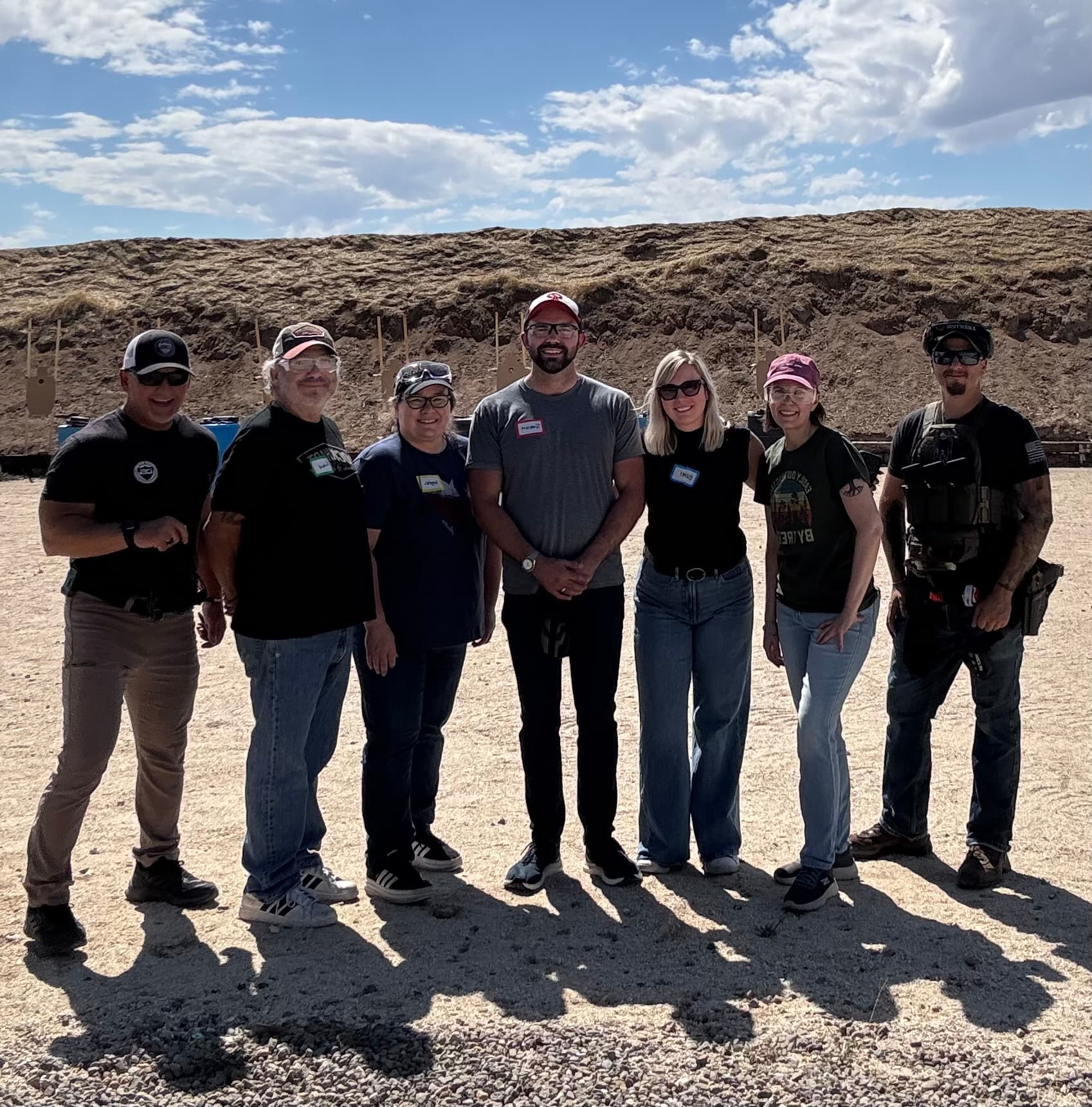
What you'll learn.
Three focused blocks that build on each other, at a pace that never rushes you.
Re-establish the baseline, then build the belt.
- Honest review of the fundamentals — the four rules, grip, stance, sight picture, trigger press
- Warm-up live fire at 3 yards from a static position, the same place your first class left off
- Holster, belt, and magazine pouch set up on your body and checked one at a time
- Why each piece goes where it goes, so you can set it up again at home
Built in pieces, at a pace you can repeat.
- The draw broken into discrete, repeatable steps — dry first, then live
- A full firing grip established in the holster, not on the way up
- Safe presentation to the target and a deliberate, looked-at reholster
- First shots from the holster at 5 yards, then out to 7
Feed it, and fix it when it stops.
- Emergency reloads — recognizing empty and getting the pistol running again
- Magazine management: what's in the gun, what's on your belt, and how you know
- Clearing a type 1 stoppage (failure to fire) with tap–rack–assess
- Clearing a type 2 stoppage (failure to eject) without guessing at it
- Putting it together — draw, fire, reload, clear — at 5 to 7 yards
Is this you?
Shooters who have completed Pistol 101 — here or anywhere else — and are ready to work from a holster for the first time.
- Pistol 101 with us, or an equivalent introductory pistol class with another instructor. Tell us what you covered when you reserve — if there's a gap, we close it in the morning review.
- You need to be able to load, unload, and make your pistol safe without step-by-step coaching. If that feels shaky, book a two-hour private first and come back. We'll tell you honestly either way.
- A belt-mounted holster that fully covers the trigger guard and stays open when the pistol is out. This class is worked from an open holster, not from concealment. If you don't own one yet, say so when you reserve and we'll help you choose before class day rather than letting you buy the wrong thing.
- Adults 18 and over. No exceptions.
- Your own reliable handgun in a defensive caliber — 9mm, .40, or .45. This is not the class for a .22 or for a pistol you've never fired. If yours has been unreliable, bring the one you trust instead.
- 150 rounds of factory defensive-caliber ammunition. Ammunition is not included in the class price. Bring 175 if you have it — malfunction drills occasionally eat more than planned.
- A real gun belt, or a stiff leather belt at minimum. A soft dress belt collapses under a loaded holster and you'll spend the day fighting your own gear instead of learning.
- A belt holster that fully covers the trigger guard and holds its shape when empty — Kydex or a rigid hybrid. A soft nylon holster is not safe to reholster into and we won't run you from one.
- At least three magazines, plus a mag pouch if you own one. Two magazines is workable; three is where reload drills stop being a bottleneck. If you only have two, tell us when you reserve.
- Eye and ear protection. Electronic muffs if you own them — you'll hear coaching on the line without stepping off it.
- Closed-toe shoes, a hat with a brim, and a shirt with a collar or a high neckline. Hot brass finds every gap.
- Water, snacks, and clothing for the weather. Double Tapp is an outdoor range with no concessions on site.
Live dates.
Pick a date and add your seat to the cart — secure checkout on our own site.
No upcoming dates are scheduled yet — check back soon, or ask about a private session.
4.942 Google reviews
Man, what a great day! My wife and I decided to take Ben’s Enhanced Concealed Carry class. Ben is thorough and patient (this was my wife’s first time on a range). He made the material interesting…— Jay Lovin, 2 years agoRead our reviews on Google
Questions, answered.
Do I need to have taken Pistol 101 at IDS?
No. Pistol 201 requires a completed introductory pistol class, but it doesn't have to be ours. If you took a beginner handgun course with another instructor, you're welcome — tell us what you covered when you reserve and we'll make sure the morning review closes any gaps.
What's the difference between Pistol 201 and Defensive Pistol One?
Pistol 201 builds the draw stroke from an open belt holster at a deliberate pace with no timer, and adds emergency reloads and malfunction clearing — it teaches the mechanics. Defensive Pistol One assumes you already have those mechanics and applies them: drawing from concealment, moving, and making decisions on the clock across a full 8-hour day and 250 rounds. Take Pistol 201 first.
Is Pistol 201 a run-and-gun class?
No. Pistol 201 is deliberately paced. Most of the day is spent at 5 to 7 yards building repeatable mechanics, and we don't use a timer as a teaching tool. Speed is a byproduct of a clean draw stroke, not the goal of this class.
What holster do I need for Pistol 201?
A belt-mounted holster that fully covers the trigger guard and holds its shape when the pistol is out — Kydex or a rigid hybrid. Soft nylon holsters collapse and aren't safe to reholster into. Pistol 201 is worked from an open holster rather than from concealment. If you don't own one yet, tell us when you reserve and we'll help you choose before class day.
How many rounds do I need for Pistol 201?
150 rounds of factory defensive-caliber ammunition — 9mm, .40, or .45. Ammunition is not included in the $125 class price. Bring 175 if you can; malfunction drills occasionally use more than planned.
I've never drawn from a holster before. Is that okay?
That is exactly who Pistol 201 is for. Every student builds the draw stroke from the beginning in this class, in pieces, dry before live. Nobody is expected to arrive already knowing how.
Will Pistol 201 get me my concealed carry permit?
No. Pistol 201 is a skills class, not a permit course — the Idaho Enhanced permit is covered in our Enhanced CCW course. Many students take Pistol 201 first so that the range day of the Enhanced course feels routine instead of stressful.
What comes after Pistol 201?
Three doors, and the order is yours. Defensive Pistol One applies these mechanics under time and movement. Red Dot Fundamentals is the one to take if you're running an optic. The Idaho Enhanced CCW course is the permit path — Pistol 201 is what makes its range day feel routine rather than stressful.
What if I don't get it in one day?
You keep training with us until you do, at no additional cost. If you're still not satisfied, we'll give your money back. That's the IDS guarantee, and it isn't fine print.
Where this fits.
Our classes build on each other. Here's what sits either side of Pistol 201— take them in whatever order suits you, and ask us if you're not sure.
Take this first
Train until you're satisfied — or your money back.
$125 · 100% satisfaction guarantee